
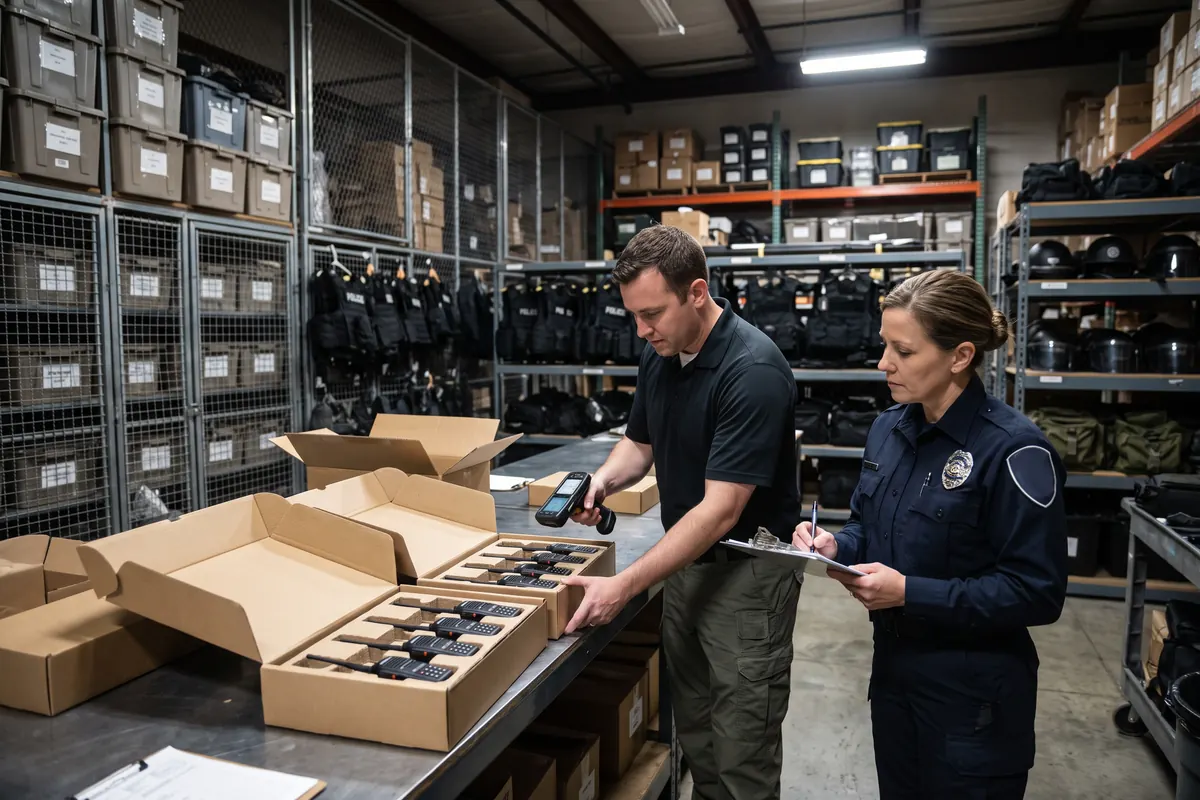
A correctional facility needs to know what equipment each shift received. That sentence explains why a custody kit isn’t bought like a batch of office supplies: each item is assigned to a person and someone must be able to verify it.
Start from the role, not the catalog
Before asking for references, define what each post does. A housing-unit officer, an intake officer and a transport officer use radios and cameras differently. The role defines battery life, carry accessories and durability.
What the specification should put in writing
- Quantities per shift and post, not a single total.
- Sizes for gloves, uniforms and protection, taken from real staff.
- Compatibility: radios must program into your network and cameras must offload into your system.
- Charging accessories: multi-unit chargers sized to headcount, plus spare batteries.
- Performance evidence and data sheets for each reference.
How a lot is received
Lot-based acceptance prevents later disputes. The warehouse checks quantities and serial numbers against the list of goods; custody staff test each device and log the assignment. Who signs off should be named in the proposal: custody area and warehouse manager.
Warranty and replacement
The proposal should state who responds for a faulty item, within what time and through which channel. For future replacements, references should be compatible with what is already in service so batteries and chargers can be shared.
In short
A good specification lets procurement, operations and IT evaluate the same offer, and lets you know six months later what each shift received.