
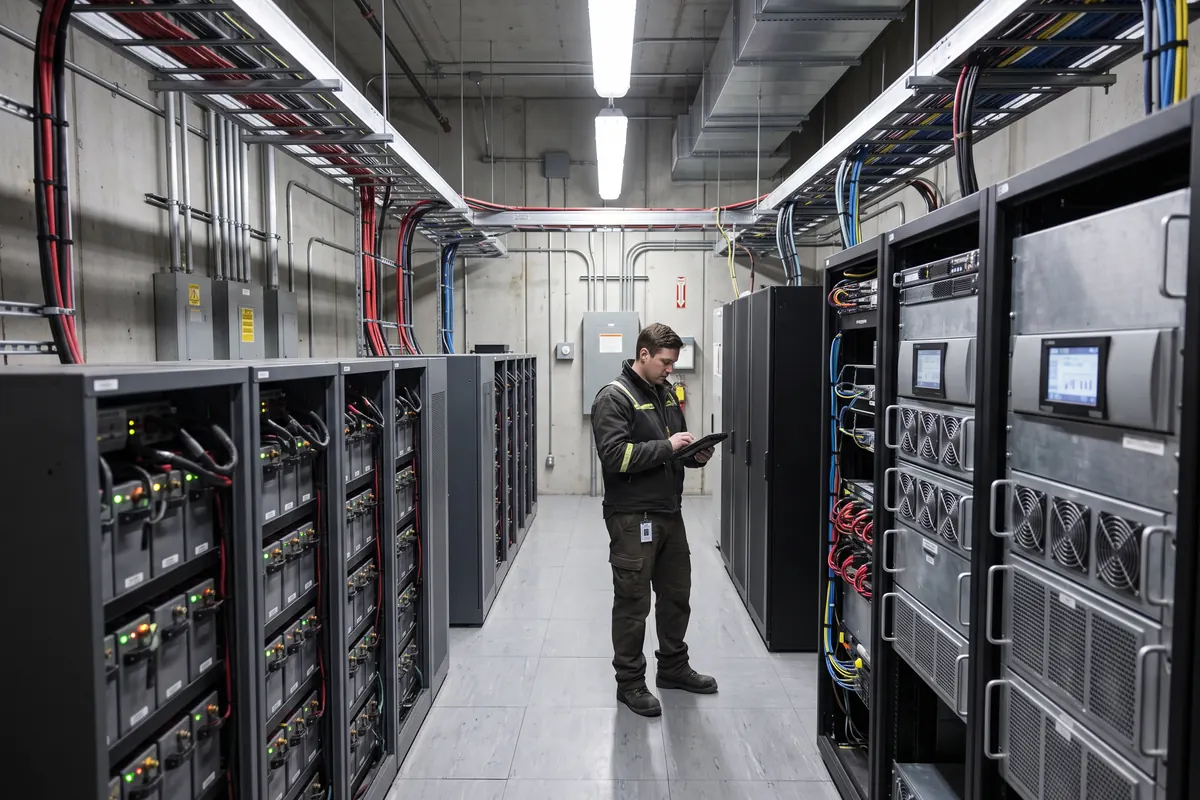
At a military communications site, what matters is proving service continuity. The question isn’t whether there are batteries, but how long the link stays up when power fails—and how you know before it happens.
Measure the real load
Add up the consumption of radios, links, cameras, controllers and climate control as they actually run, not per each device’s nameplate. It’s the figure most often misjudged.
Define the required autonomy
How many hours must the site hold without grid power? It depends on how long maintenance staff take to arrive and how critical the link is.
Choose the configuration
- UPS and battery banks for grid-connected sites with short outages.
- Solar or hybrid for remote posts or unreliable grids.
- Support generation when the required autonomy is long.
Monitor status
The supervision post should receive power and link alerts. A degraded battery no one sees is a scheduled failure.
Test continuity
A scheduled test simulates the outage, verifies the link holds and records the observed autonomy. Communications and maintenance leads sign off.
In short
Continuity is designed with load data, watched with monitoring and proven with a documented test.